The PAS Museum of the Earth’s involvement in the Polish-Mongolian Paleontological Expeditions to the Gobi Desert
This exhibition was created on the initiative of and in cooperation with the PAS Museum of the Earth in Warsaw, the PAS Institute of Paleobiology, and the Museum of Evolution of the PAS Institute of Paleobiology.
Tarbosaurus bataar (Maleev, 1955)
Long before Tyrannosaurus rex terrorized North America, its close kin Tarbosaurus bataar reigned supreme in Asia. These two predatory species are similar enough to one another that they were initially thought to belong to the same genus (Tyrannosaurus). Today, however, we know that Tarbosaurus was a separate genus of dinosaurs, reaching somewhat smaller sizes than Tyrannosaurus.
Adult Tyrannosaurus rex , Adult Tarbosaurus bataar, Juvenile Tarbosaurus bataar (skeleton cast on display)
Like other members of the tyrannosaurid family, Tarbosaurus bataar was a bipedal predator with a large skull, a massive pelvis, and small forelimbs. The head of an adult tarbosaur measured over one meter, its body length reached up to 10 meters, and its weight could reach about 5 tons.
Numerous openings in its skull helped reduce the bone’s massive weight. Studies of its braincase indicate that the tarbosaur had an excellent sense of smell and hearing, as well as a strong ability to maintain balance and coordinate its body movements.
Marks left behind by tarbosaur teeth on the skeletons of herbivorous dinosaurs show that it preyed on large animals. The structure of their snout (a tall maxilla, massive lower jaw, and strong, curved teeth) indicates that tarbosaurs could bite with great force, tearing off chunks of flesh.
The jawbones of adult tarbosaurs often bear scars from fights, most likely with members of their own species. This behavior may have been related to establishing dominance over a given territory.
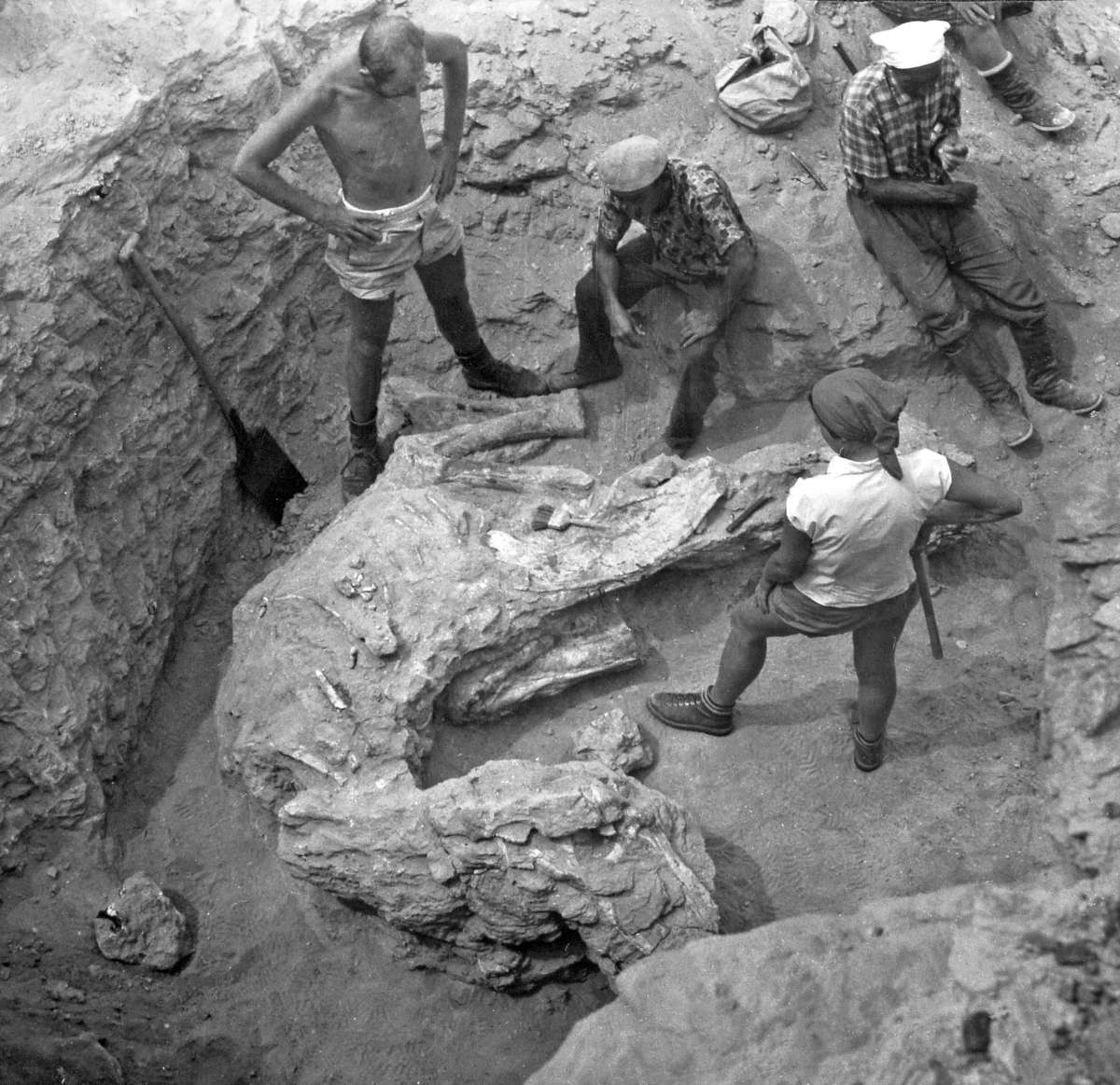
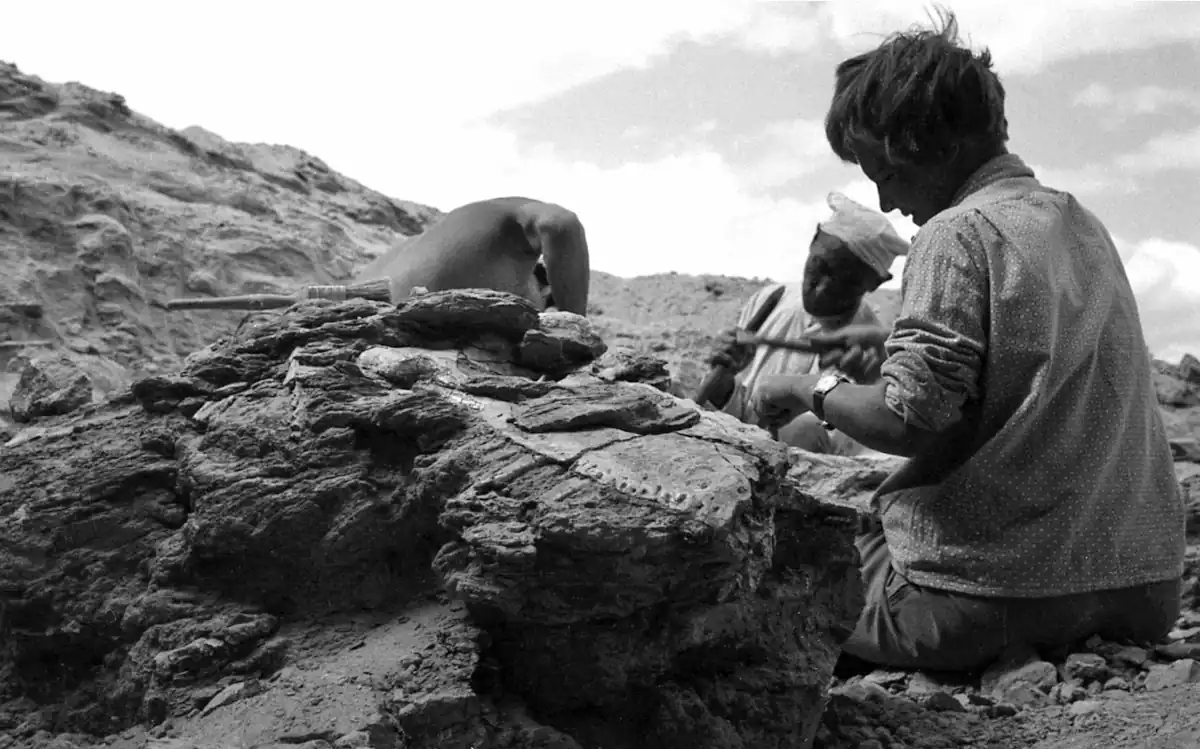
The juvenile Tarbosaurus bataar skeleton being excavated at Tsagaan Khushuu during the Polish–Mongolian Paleontological Expedition of 1964
The Story of the Juvenile Tarbosaurus Skeleton’s Discovery
In 1964, members of the second Polish-Mongolian Paleontological Expedition decided to travel to Tsagaan Khushuu in southern Mongolia – a site with exposures of the Nemegt Formation.
Gwidon Jakubowski from the Museum of the Earth, Polish Academy of Sciences in Warsaw – discoverer of the juvenile tarbosaur skeleton
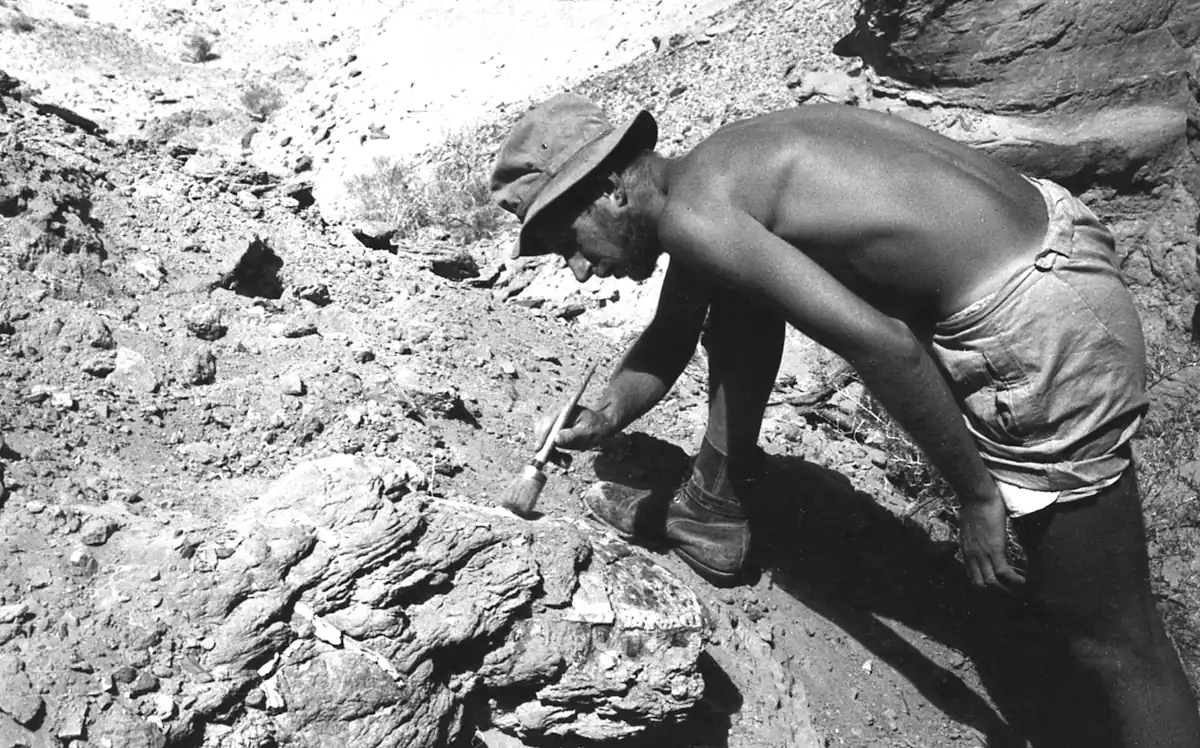
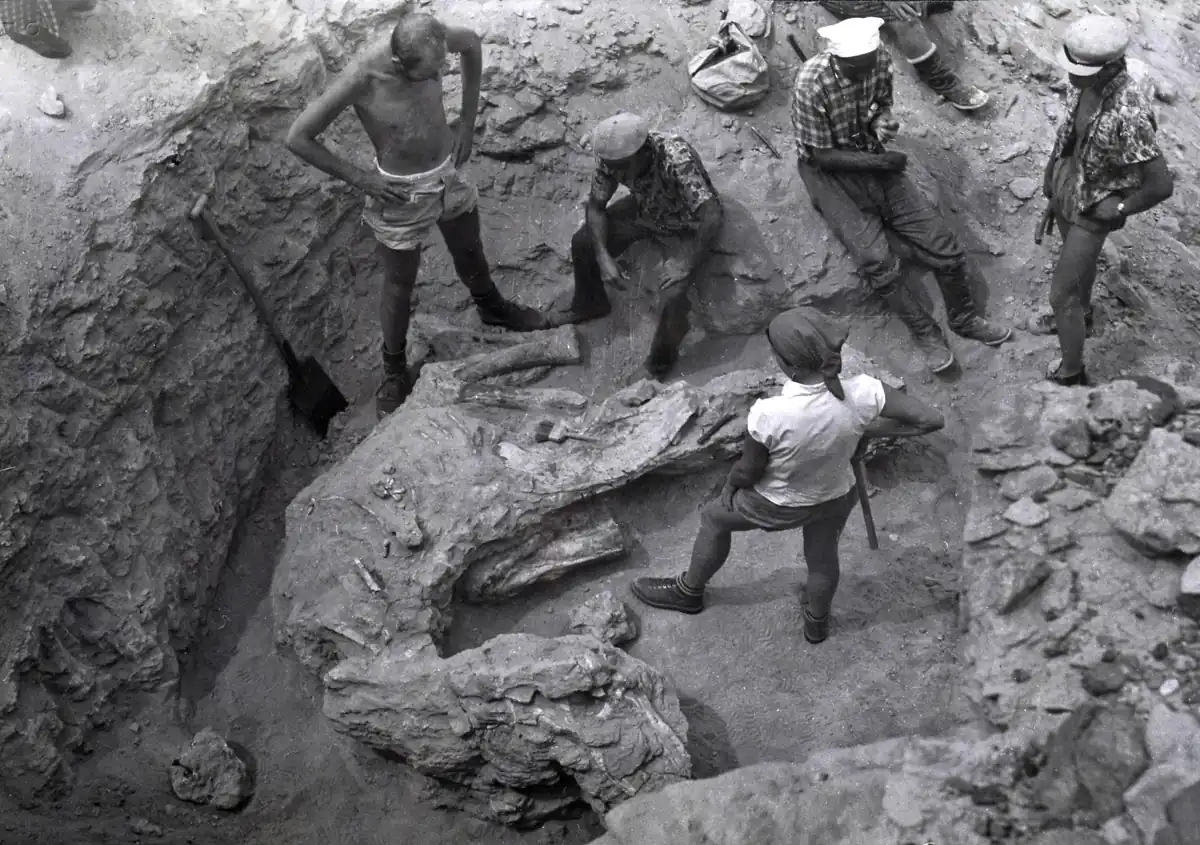
“While we were walking across the terrain at Tsagaan Khushuu, examining the exposed layers of pale and more reddish Cretaceous sandstones, Gwidon Jakubowski pointed out a spot where bones were visible in the cliff wall, about two meters below the surface. They were situated about 2.5 meters apart, and it was reasonable to assume they came from the same skeleton. […] After the first day of excavations, the nearly complete, well-preserved skull of a relatively small predatory dinosaur from the tyrannosaur group had been revealed. Presumably, as with all dinosaurs of this group found in the Gobi, it belonged to the genus Tarbosaurus. As the skeleton continued to be uncovered, the find became more and more fascinating. Within a few days, an almost complete* and remarkably well-preserved tarbosaur skeleton emerged, positioned on its side with the head arched backward, the legs tucked in, and the tail curved. […] It was relatively small in size; we estimated that it was just over 7 meters long. The skeleton had been preserved in exactly the position in which the animal died about 80 million years ago. In this same death posture – with its head thrown back and legs drawn in – we often found the bodies of camels in the desert.”
*Unfortunately, elements at the extremes of the skeleton (the tip of the snout and more than half of the tail), which protruded from the cliff wall, had weathered away and did not survive to our time.
Zofia Kielan-Jaworowska, Polowanie na dinozaury [Hunting for Dinosaurs], Wydawnictwa Geologiczne, 1969, pp. 35–36.
Articulated skeletons of extinct animals – those in which the bones remain connected at the joints – are very rare in the fossil record. For a specimen to be preserved in this way, the animal’s body must be rapidly buried by sediment shortly after death. This was most likely the case for the juvenile Tarbosaurus bataar, the apex predator of its time, whose skeleton was discovered in 1964 during the Polish-Mongolian Paleontological Expedition.
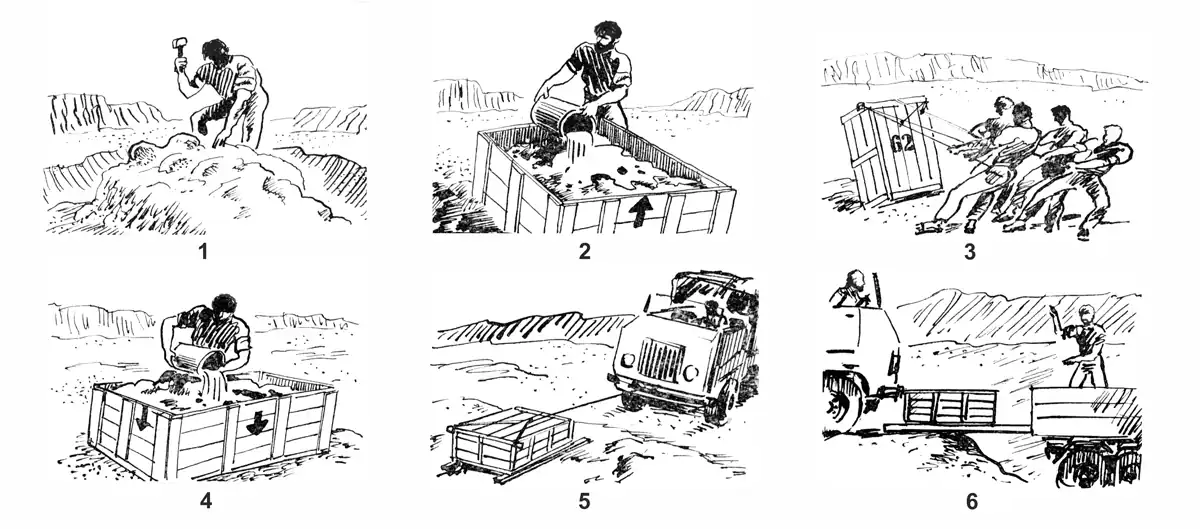
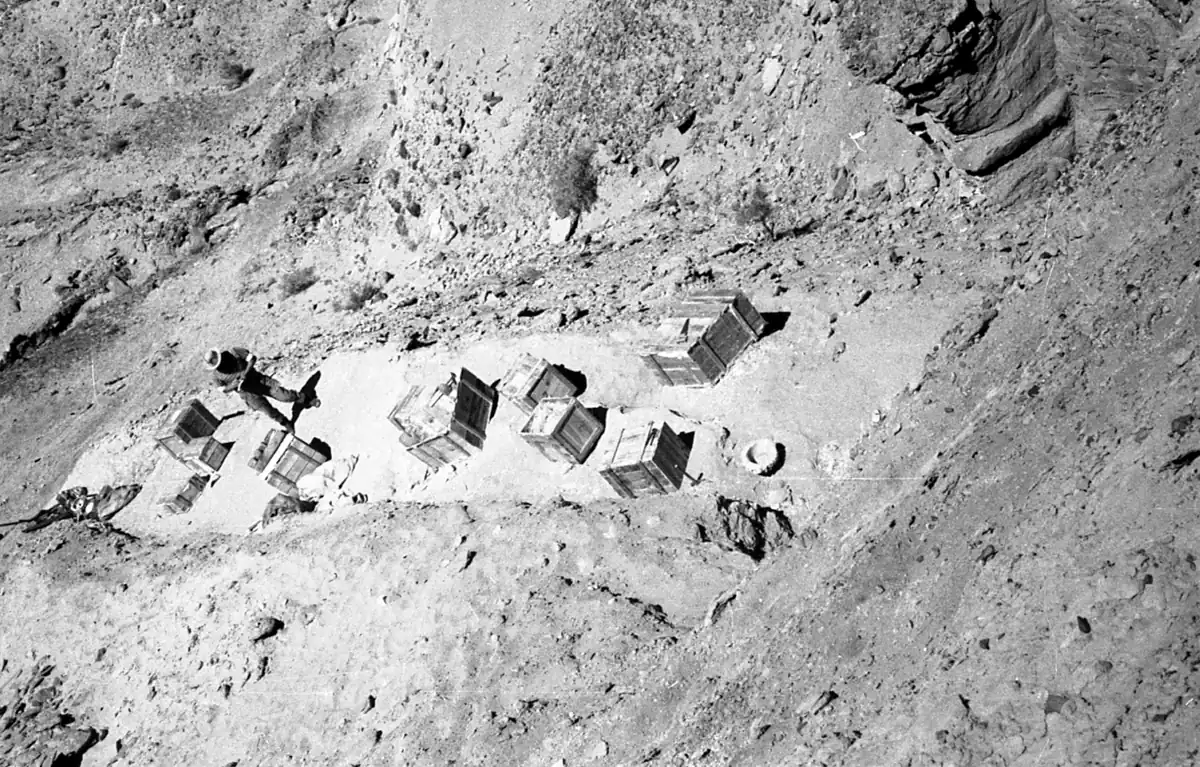
Method used to excavate skeletons: 1 – removing bones from the rock, 2 – placing a wooden frame around the rock block containing bones and securing it with plaster, 3 – turning over the resulting monolith, 4 – filling the lower part of the monolith with plaster, 5 – moving the monolith with a winch onto the loading ramp, 6 – pushing the monolith from the ramp onto another truck (after: Zofia Kielan-Jaworowska, W poszukiwaniu wczesnych ssaków [In Search of Early Mammals], University of Warsaw Press, 2013, p. 37. Illustration by M. Kuczyński)
The excavated block of rock containing the skeleton was divided up into eleven parts. After they were transported to Poland and reassembled, the excess rock was removed from the specimen’s right side. A cast was then made, showing the original position in which the dinosaur was found, with the missing elements of the skull reconstructed – this cast is on display here.
After the skeleton had been prepared from the rock, it was originally reconstructed in a pose with its spine half-upright, reflecting the scientific understanding of dinosaurs in the 1970s. Today we know that this image was inaccurate. A new reconstruction, based on current knowledge, can now be seen at the Museum of Evolution of the PAS Institute of Paleobiology.
The nearly complete, original skeleton of a juvenile tarbosaur from Tsagaan Khushuu, inventory number ZPAL MgD-I/3, in the Museum of Evolution of the PAS Institute of Paleobiology
The Polish-Mongolian Paleontological Expeditions to the Gobi Desert (1963–1971)
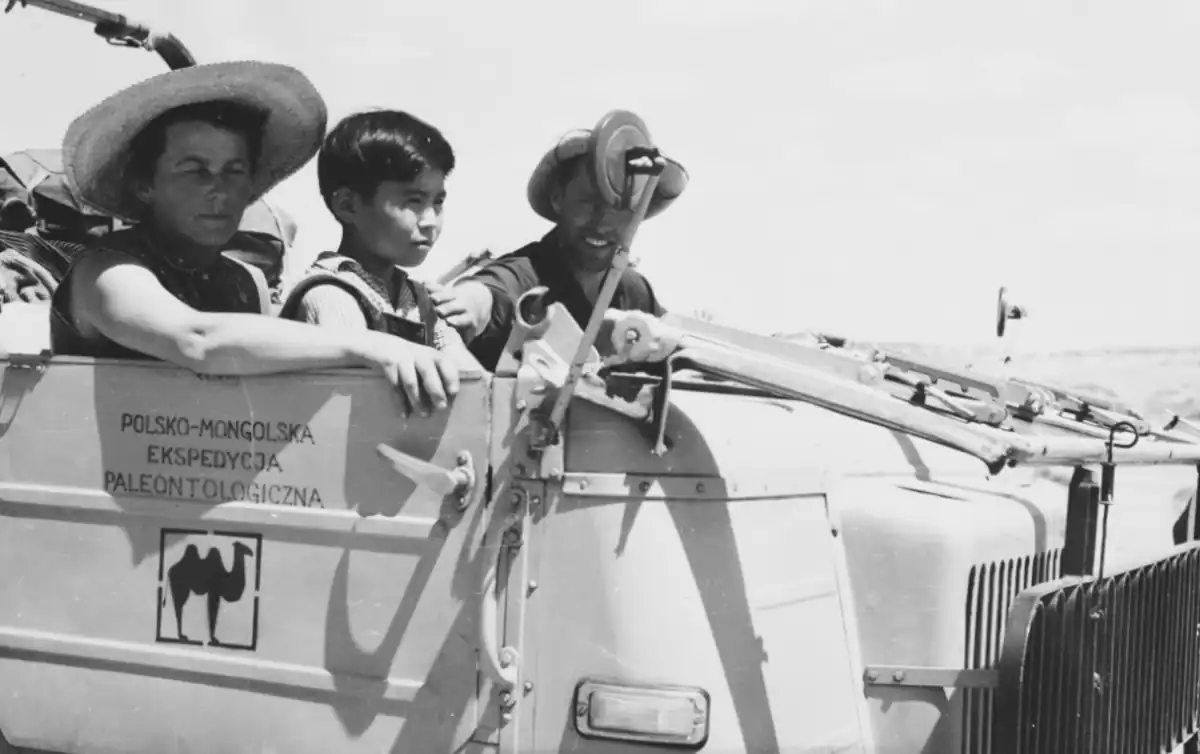
Gobi Desert, 1965. In the foreground: Zofia Kielan-Jaworowska – Polish paleobiologist, professor, long-time researcher at the PAS Institute of Paleobiology in Warsaw, organizer and leader of the Polish-Mongolian Paleontological Expeditions (1963–1971). She was honored with the title of “Righteous Among the Nations”.
“In 1962, a delegation from the Presidium of the Polish Academy of Sciences traveled to Mongolia to sign a three-year (1963–1965) cooperation agreement.* […] I prepared a plan for organizing joint Polish-Mongolian Paleontological Expeditions to be included in the agreement, and Professor Kozłowski, a member of the delegation, took it with him. The proposal was very well received by representatives of both Academies, and after the Polish delegation returned, I was appointed by the authorities of the Polish Academy of Sciences to organize and lead these expeditions.”
*a cooperation agreement between the Polish Academy of Sciences and the then recently established Academy of Sciences of the Mongolian People’s Republic
Zofia Kielan-Jaworowska, W poszukiwaniu wczesnych ssaków [In Search of Early Mammals], University of Warsaw Press, 2013, p. 34
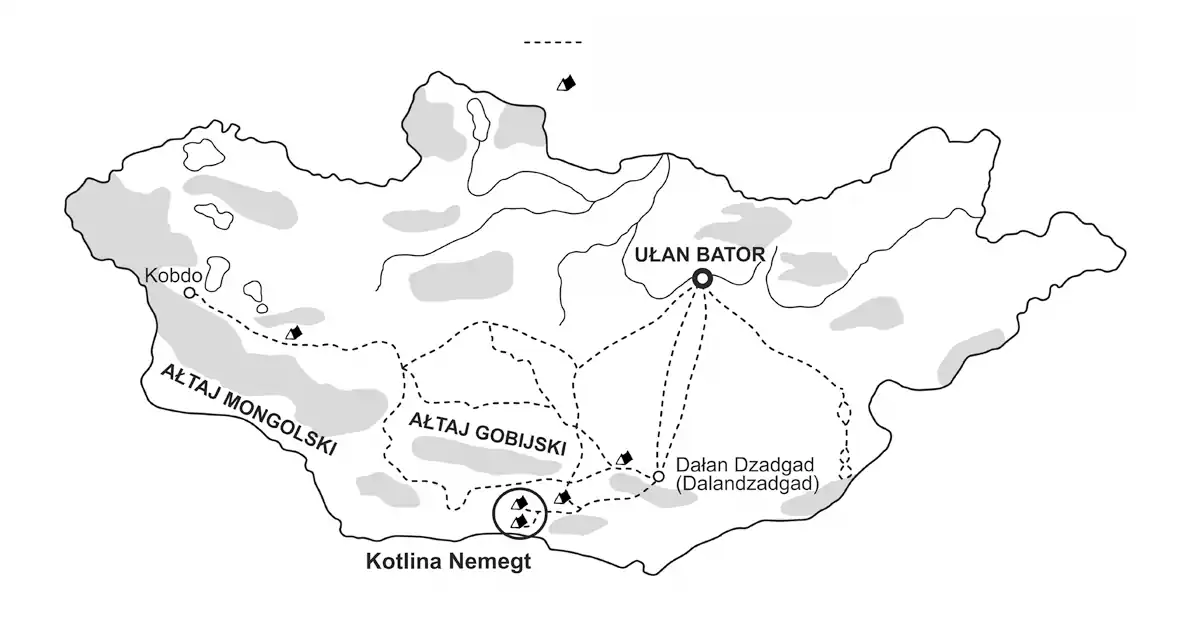
The first expedition, in 1963, primarily involved reconnaissance. Major field campaigns followed in 1964, 1965, 1970, and 1971, when large-scale excavations were carried out in the Gobi Desert and western Mongolia. In addition, three smaller expeditions took place in 1967, 1968, and 1969. These did not involve excavations but focused instead on surface collecting, yielding fossils – mainly mammals and lizards – from the Cretaceous rocks at Bayan Zag.
The Polish-Mongolian Paleontological Expeditions to Mongolia (1963–1971) were recognized worldwide as among the most important paleontological undertakings of their time. They yielded not only impressive dinosaur skeletons but also fossils of birds, mammals, turtles, crocodiles, lizards, snakes, invertebrates, and plants.
At the time the project ended, the collection of Late Cretaceous mammals gathered during the expeditions represented the world’s largest assemblage of Mesozoic mammal skulls housed at any scientific institution.
The Role of the PAS Museum of the Earth in the Polish-Mongolian Paleontological Expeditions to the Gobi Desert
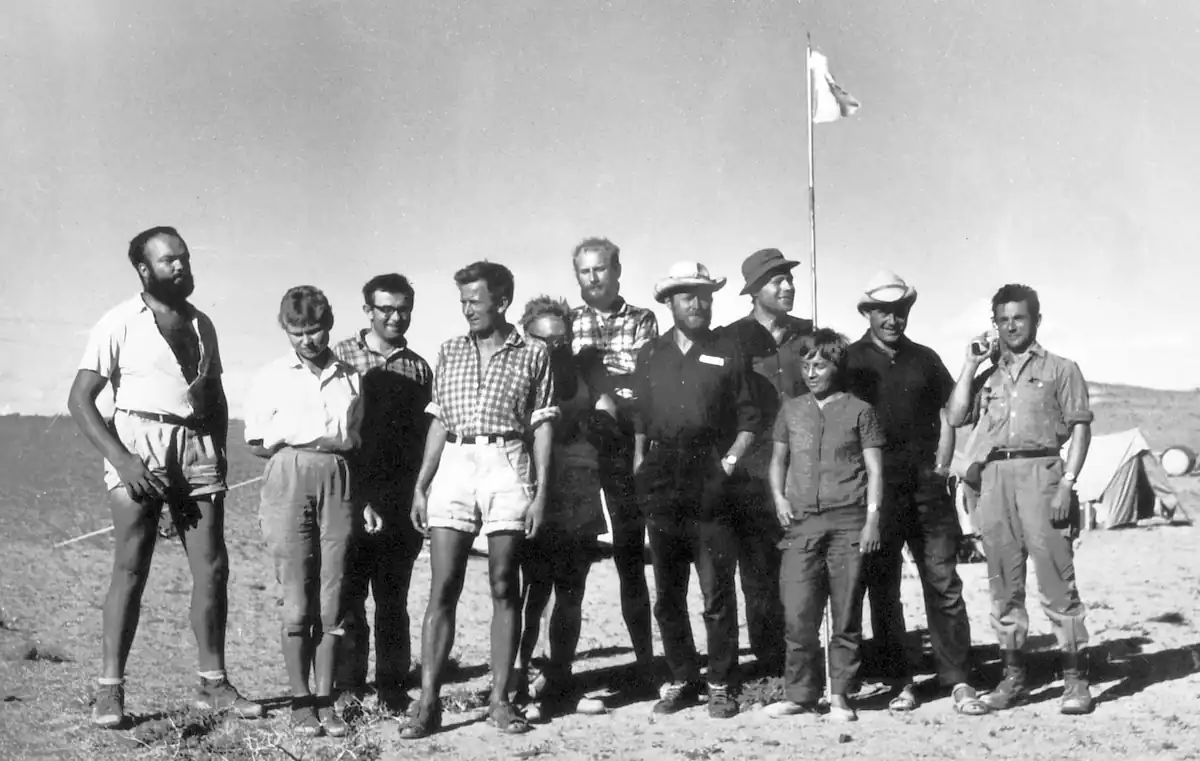
The “Bayn Dzak team,” 1964. From left: Wojciech Skarżyński (technical assistant), Magdalena Borsuk-Białynicka (paleontologist), Ryszard Gradziński (geologist), Jerzy Lefeld (geologist), Andrzej Sulimski (paleontologist), Gwidon Jakubowski (paleontologist), Dobiesław Walknowski (driver), Wiesław Maczek (technical assistant and driver), Teresa Maryańska (paleontologist), Kazimierz Kowalski (paleontologist and expedition leader), and Maciej Kuczyński (technical leader).
The original plan for the expeditions envisioned that Professor Zofia Kielan-Jaworowska would assume overall organizational and scientific leadership, while Associate Professor Julian Kulczycki, then head of the Department of Paleozoology at the Museum of the Earth of the Polish Academy of Sciences in Warsaw, would lead the fieldwork. In 1963, he directed a five-person reconnaissance expedition that identified sites for future excavations. Kulczycki was also meant to lead the 1964 expedition, but for health reasons he was replaced by Professor Kazimierz Kowalski of Kraków.
Among the staff of the Department of Paleozoology of the Museum of the Earth, Polish Academy of Sciences in Warsaw, participants in the expeditions included Teresa Maryańska and Gwidon Jakubowski.
Routes of the expeditions in 1963, 1964, and 1965, Excavation work
Mongolia – Land of Steppes and Dragon Bones
Paleontological excavations in the Gobi Desert of Mongolia have been carried out almost continuously since 1922. Complete dinosaur skeletons are still being unearthed there, often even including skin impressions, making them among the best-preserved in the world. The Gobi remains a site of enormous research potential that continues to attract scientists from across the globe.
Photos descriptions:
Two weeks of painstaking work, and a specimen buried for millions of years is finally uncovered. In the foreground: Teresa Maryańska
We cannot take the entire skeleton; it must be divided into sections and turned into monoliths
The skeleton was divided into 11 parts. The largest monolith weighs over 1,500 kilograms
The photographs presented here come from the archives of the PAS Museum of the Earth and the Paleontological Collection of the PAS Institute of Paleobiology